Posted on Leave a comment

The Stone Legacy of Mostar Bridge

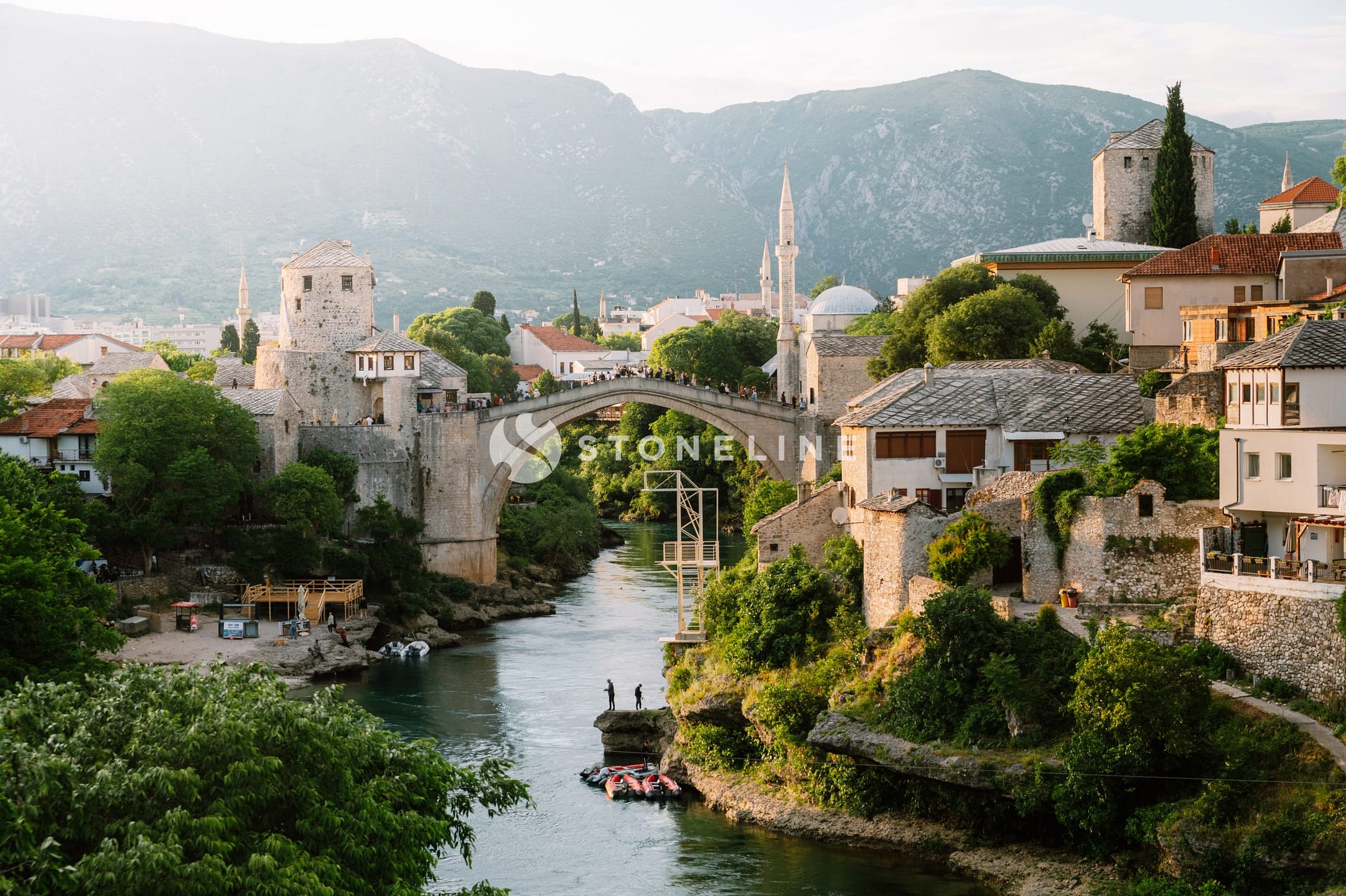
Mostar’s Stari Most is one of the clearest examples in Europe of stone as both structure and symbol. UNESCO describes the Old Bridge area as a place where the rebuilt bridge and the surrounding urban fabric represent a powerful case of post-conflict restoration and the continuation of a shared cultural landscape.

Technically, Stari Most is a masterclass in compressive architecture. The stone arch is not “strong because stone is strong,” but because the geometry routes forces into compression along the curve, while the masonry units (voussoirs) and joints maintain load paths with minimal tensile demand. When such bridges fail, it is often due to localised issues—water infiltration, freeze–thaw damage, settlement, or inappropriate repairs—rather than a simple material weakness.

Material authenticity has been central to Stari Most’s modern history. The bridge was destroyed in 1993 and reopened after reconstruction in 2004, with international involvement and an explicit goal of respecting original techniques and materials as closely as feasible. Research and reconstruction documentation discusses the historic use of local limestone—often referred to as tenelija—and the emphasis on sourcing appropriate stone for the rebuild, aligning physical behaviour with the original fabric.

From a stone-durability standpoint, a bridge like Stari Most has a uniquely harsh exposure profile: wind-driven rain, direct water proximity, thermal cycling, and surface abrasion from constant use. That means “natural stone durability” is not a slogan; it is measurable through characteristics such as pore structure, water absorption, and resistance to salt and frost. But durability is also crafted:

  • Jointing and mortar selection: lime-based systems can offer compatibility and vapour permeability that reduce trapped moisture.
  • Stone orientation and detailing: bedding planes and exposed edges matter greatly in long-term decay patterns.
  • Surface treatments: aggressive sealants can be counterproductive if they trap moisture; breathable approaches are usually preferred in heritage contexts.

For modern projects, Stari Most is a reminder that resilient stone design is a systems problem: quarry selection, block quality, cutting accuracy, joint geometry, water management, and maintenance plans together determine whether a stone structure lasts for centuries—or only looks like it should.

Sources (for this article)

  • UNESCO — Old Bridge Area of the Old City of Mostar (World Heritage listing).
  • UNESCO — Rebuilding of Stari Most (context and significance).
  • Reconstruction technical document (PDF) discussing geometry/material considerations.
  • Reference noting local limestone “tenelija” used for Stari Most.
  • Archnet — Stari Most listing/context. 
Posted on Leave a comment

The Historic Stone Heart of Brussels: Grand Place

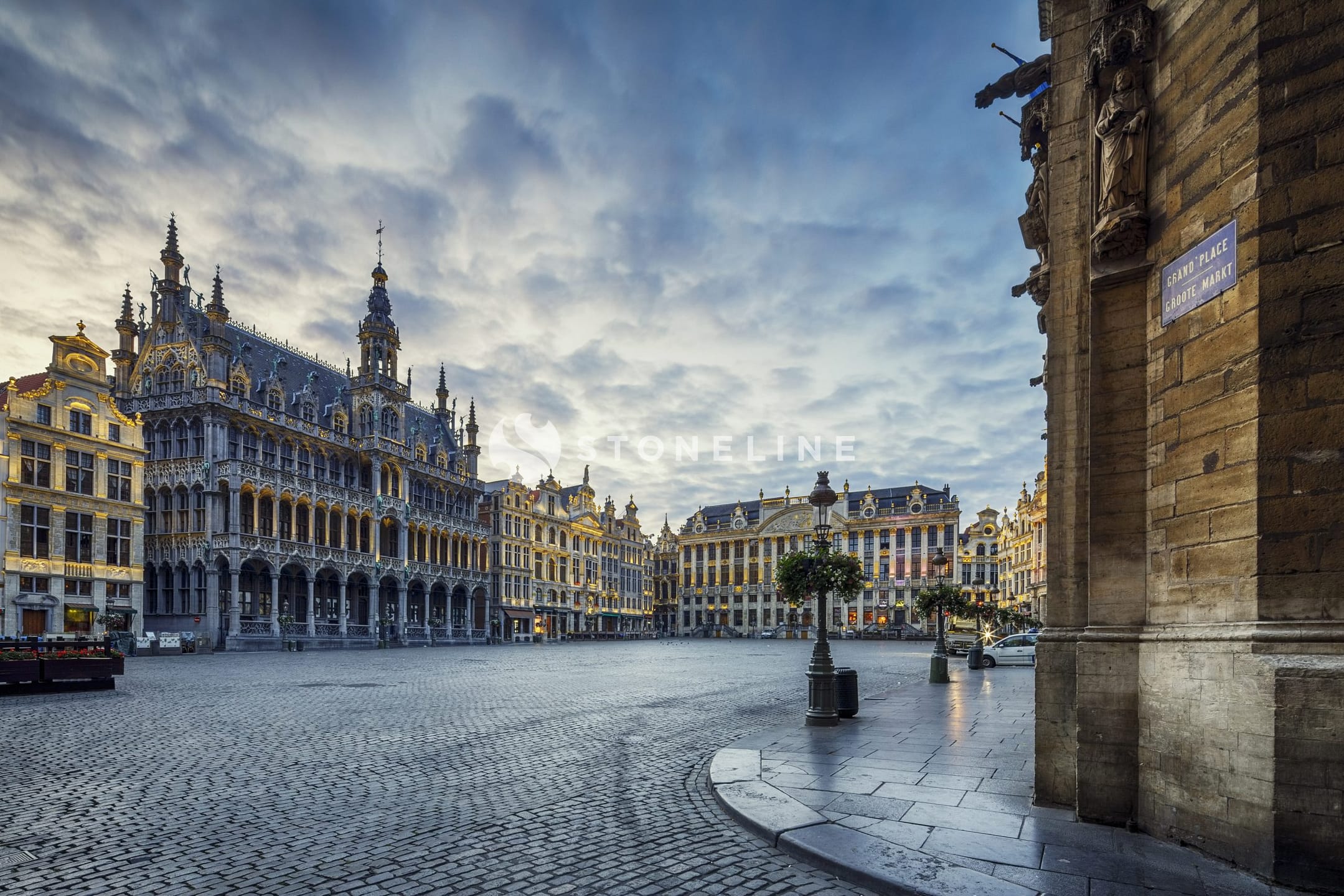
Brussels’ Grand-Place is a concentrated lesson in how stone defines civic memory. UNESCO’s inscription highlights the square as an exceptional example of an architectural and urban ensemble—one shaped by guild houses and public buildings whose façades create a coherent, monumental “room” in the city.

For stone practitioners, the square is compelling for two reasons: vertical stonework (façades, sculptural ornament, architectural details) and horizontal stonework (the ground plane, where cobblestones handle centuries of footfall, cleaning cycles, and seasonal wetting). Even when façades are gilded or painted, their underlying stone logic remains legible: carving depth, joint rhythm, and the way profiles cast shadow are all functions of stone tooling and durability.

The paving is equally instructive. Accounts of Brussels’ cobblestone heritage describe the Grand Place’s surface as part of a broader tradition of Belgian stone pavements—commonly associated with hard stones such as Belgian porphyry in historic streetscapes, and described by local reporting as using Belgian stone materials in and around the centre. In practice, the technical requirements for such pavements are strict: high abrasion resistance, good frost durability, and performance under repeated wetting and de-icing salts. Aesthetic continuity matters, but so do coefficients of friction and the long-term stability of bedding layers.

For heritage restoration, Grand-Place also reinforces a central rule: replace like with like, but document the “like.” Successful interventions typically start with:

  • Stone identification: petrographic analysis and comparison of physical properties (open porosity, water absorption, compressive strength, salt resistance).
  • Decay mapping: understanding whether damage is driven by rising damp, façade runoff, atmospheric deposition, or biological films.
  • Detail replication: maintaining tooling marks, edge arrises, and joint profiles—because these affect how the stone sheds water and how quickly it soiles.
  • Procurement discipline: ensuring consistent batches for colour and texture, particularly for bespoke stone projects where a single façade bay can reveal variability.

What makes Grand Place enduring is not only its design but its material governance—the slow, careful work of maintenance, replacement, and craft continuity that keeps a stone ensemble readable across centuries.

Sources (for this article)

  • UNESCO — La Grand-Place, Brussels (World Heritage description and significance).
  • Brussels Express — “Cobblestone heritage” context (Grand Place cobblestone discussion).
  • The Brussels Times — Notes on cobblestone material variety in Brussels, incl. Grand Place. 
Posted on Leave a comment

Schönbrunn Palace and the Lasting Power of Limestone

Schönbrunn Palace in Vienna is often described through the lens of Baroque composition axial gardens, orchestrated vistas, and an architectural language designed to communicate imperial permanence. Yet that sense of permanence is not only stylistic; it is also material. The Schönbrunn ensemble is part of a UNESCO World Heritage property, and its long-term legibility depends heavily on the performance of its building stones in an urban atmosphere shaped by moisture, freeze–thaw cycles, pollution, and biological growth.

In the Habsburg context, limestone is not simply “a façade material.” In Austria, many historic quarries supplied biogenic limestones (including the Leitha Limestone family) that were valued for workability, availability in large blocks, and a performance profile that can be engineered—through selection, orientation, finishing, and detailing—toward a target service life. Engineering geology literature notes the importance of these Austrian limestones and points specifically to Kaisersteinbruch quarries as a source of high-quality stone historically used in the region.

For heritage sites like Schönbrunn, the key technical challenge is compatibility: replacement stones must behave like the original under the same exposure regime. Many conservation failures are not dramatic fractures but slow incompatibilities—mismatched porosity, different capillary uptake, or inconsistent salt transport—leading to accelerated scaling and contour loss. Austrian geological documentation on Leithakalk (Leitha limestone) explicitly references its use in Vienna restoration work and cites architectural and sculptural applications at Schönbrunn, underscoring how closely this material family is tied to the city’s historic fabric.

A useful way to read Schönbrunn, therefore, is as a “stone performance laboratory” at a monumental scale. Even within the palace gardens, carbonate stones appear in different roles, from load-bearing and paving contexts to decorative elements. The Neptune Fountain page from Schönbrunn’s official site identifies Sterzing marble for the sculptural group—an instructive contrast, because marble and limestone share carbonate chemistry yet often respond differently to weathering, microcracking, and biological films.

From a specification perspective—especially for UK-facing projects—Schönbrunn reinforces four practical principles:

  1. Match pore structure before you match colour. Visual similarity without comparable porosity and capillarity is a common route to premature decay.
  2. Detailing is durability. Drips, throats, and ventilated interfaces can extend service life more than small differences in strength class.
  3. Finish selection is an engineering choice. Honed, sandblasted, and tooled finishes each change wetting behaviour and soiling patterns.
  4. Plan maintenance as part of design. For heritage settings, cleaning regimes, water management, and biological control are as important as the initial stone selection.

In short, Schönbrunn’s “timelessness” is not an abstraction. It is the outcome of quarry geology, craft practice, and conservation decisions working together across centuries—exactly the intersection where high-quality natural stone and custom stone designs matter most.

Sources (for this article)

  • UNESCO — Schönbrunn Palace World Heritage listing overview.
  • Vienna.info — Schönbrunn Palace background (history and significance).
  • Schönbrunn official site — Neptune Fountain (Sterzing marble, design notes).
  • Bednarik et al., Engineering Geology — Leitha Limestone / Kaisersteinbruch context (historical quarry significance).
  • Austrian geological documentation (PDF) referencing Leithakalk applications incl. Schönbrunn architecture/sculpture.
Posted on Leave a comment

Stoneline Stone Sculpture Workshop 2025

Stoneline invites students from the Sculpture Departments of Mimar Sinan University and Marmara University’s Faculties of Fine Arts to explore the art of stone sculpture in depth.

The Stoneline Stone Sculpture Workshop 2025 offers participants not only technical knowledge but also a unique space to understand the spirit of the material and transform it into an artistic language.

From Technical Skill to Artistic Expression
This special workshop helps young artists develop their technical abilities while providing a creative environment where they can freely express their unique vision. Guided by master sculptors, the process will enable students to grow both in knowledge and in artistic expression.

A Gateway to the Art World
The works produced during the workshop will be permanently exhibited at the Stoneline Istanbul Showroom. This exhibition will give young artists the opportunity to present their creations to a wider audience of art enthusiasts, gaining visibility and recognition. Thus, the workshop will serve not only as a learning experience but also as an important step into the professional art world.

For event details, the terms and conditions, and the application form, click the link below:
https://stoneline.com.tr/tr/stoneline-tas-heykel-calistayi-2025/

Posted on Leave a comment

Beyond Borders: Salque & Peirani in Concert with Stoneline

The gardens of the French Palace hosted a truly special concert as part of the IKSV Music Festival. Cellist François Salque and accordionist Vincent Peirani took the audience beyond borders, blending classical music with world and jazz influences.

A Classical Piece, A Fresh Interpretation

At the heart of the concert was the Adagio from Mendelssohn’s Cello Sonata No. 2. Yet, through Salque and Peirani’s unique interpretation, the piece moved beyond the conventional. It came alive on stage with an emotionally rich, simple, and striking performance.

A Journey Through Tonal Landscapes

This evening offered a harmony of music’s serene and passionate sides. At times, a single note held the depth of a poem. At others, the dialogue between the two instruments built a bridge between past and future. The transitions between tones were seamless—everything in its place, yet nothing predictable.

A Touch of Art from Stoneline

At Stoneline, we believe in the beauty nature offers as well as the power of art. This special concert was a joyful opportunity to bring together the grace of music and the timelessness of natural stone.

Thank You

We would like to thank all our guests who shared this evening with us in the historic setting of the French Palace. We look forward to meeting again in the inspiring world of music.

Posted on Leave a comment

Collaboration Between Gönye Project Design And Stoneline

As Stoneline, we are excited to be a solution partner for projects that push the boundaries of design and enrich aesthetic experiences.

Within the scope of our architectural office visits in this direction, we were guests of Gönye Project Design today. We had an efficient presentation where we shared our collections, designs and application areas.

We would like to thank Gönye Project Design team for their hospitality and interest!