Stoneline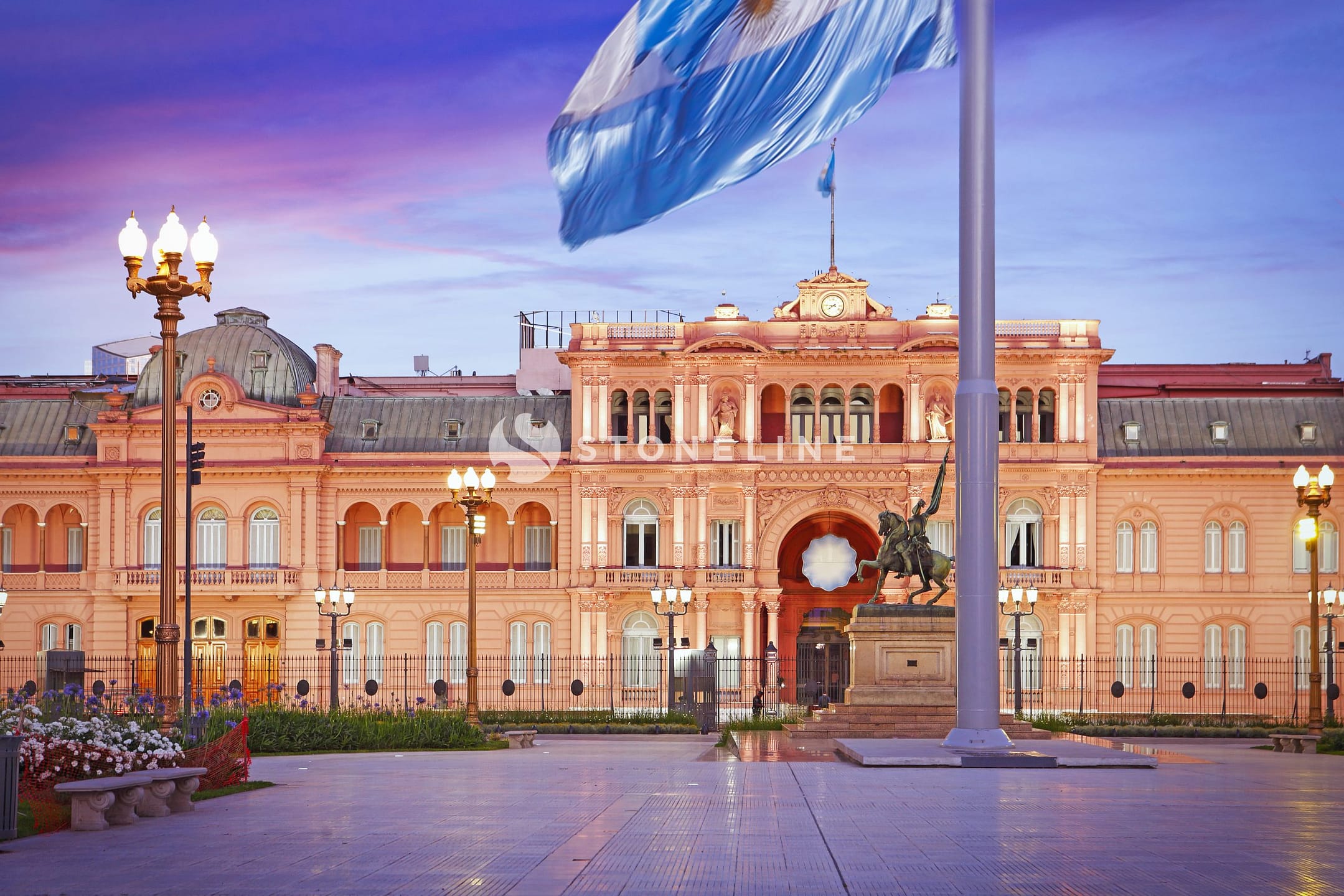
A “pink façade” built on masonry—and finished for permanence
Casa Rosada’s identity is inseparable from its colour. The official Casa Rosada history states that President Sarmiento painted its façade pink, and that the building is a composite of earlier governmental structures developed through the 19th century.
From a materials standpoint, this matters: Casa Rosada is not primarily a stone-clad façade story in the way some European state buildings are. It is a story of masonry substrate and protective finishes designed to handle Buenos Aires’ humidity and the building’s civic visibility.
A modern explanation of the pink finish tradition highlights historic practices of mixing lime with additives (including the widely repeated “cow’s blood” account) to improve water resistance and adhesion—an example of early moisture-management thinking in architectural coatings.
Where marble enters: interiors as institutional symbolism
Even if the exterior reads as colour and stucco, Casa Rosada’s interiors use stone to communicate continuity and authority. The official “Halls & Salons” description notes a Carrara marble bust in the White Hall and mentions bronze elements on marble plaques, placing marble directly inside the building’s ceremonial core.
Technical lens: marble in civic interiors performs beyond aesthetics:
- it acts as a durable, cleanable surface in high-visibility rooms,
- it supports fine sculptural detail,
- it visually stabilises ornate spaces (a “calm” material against complex ornament).
Luxury stone design in an Argentine civic context
In many state buildings of the late-19th-century Atlantic world, the most durable “luxury” materials are concentrated in:
- primary reception halls,
- formal staircases and landings,
- fireplaces, chimneypieces, and sculptural programs.
Casa Rosada’s official interior descriptions align with this pattern through their explicit references to marble artworks and marble-backed features.
Bespoke stone materials: not more stone—better stone placement
Casa Rosada illustrates an advanced principle that modern natural-stone design still benefits from: you don’t need stone everywhere to create permanence. Instead, you place premium stone where it performs best:
- touch points (thresholds, stair edges, plinths),
- ceremonial focal points (sculpture, fireplaces, memorial elements),
- high-cleaning zones where finish stability matters over decades.
This is how “bespoke” should be read: not exoticity for its own sake, but precision—choosing the right stone, finish, and detail for the building’s most meaningful and demanding spaces.
Sources used: Casa Rosada (official history) ; Casa Rosada (official Halls & Salons—Carrara marble references) ; Sacyr note on traditional pink finish explanations .