 Stoneline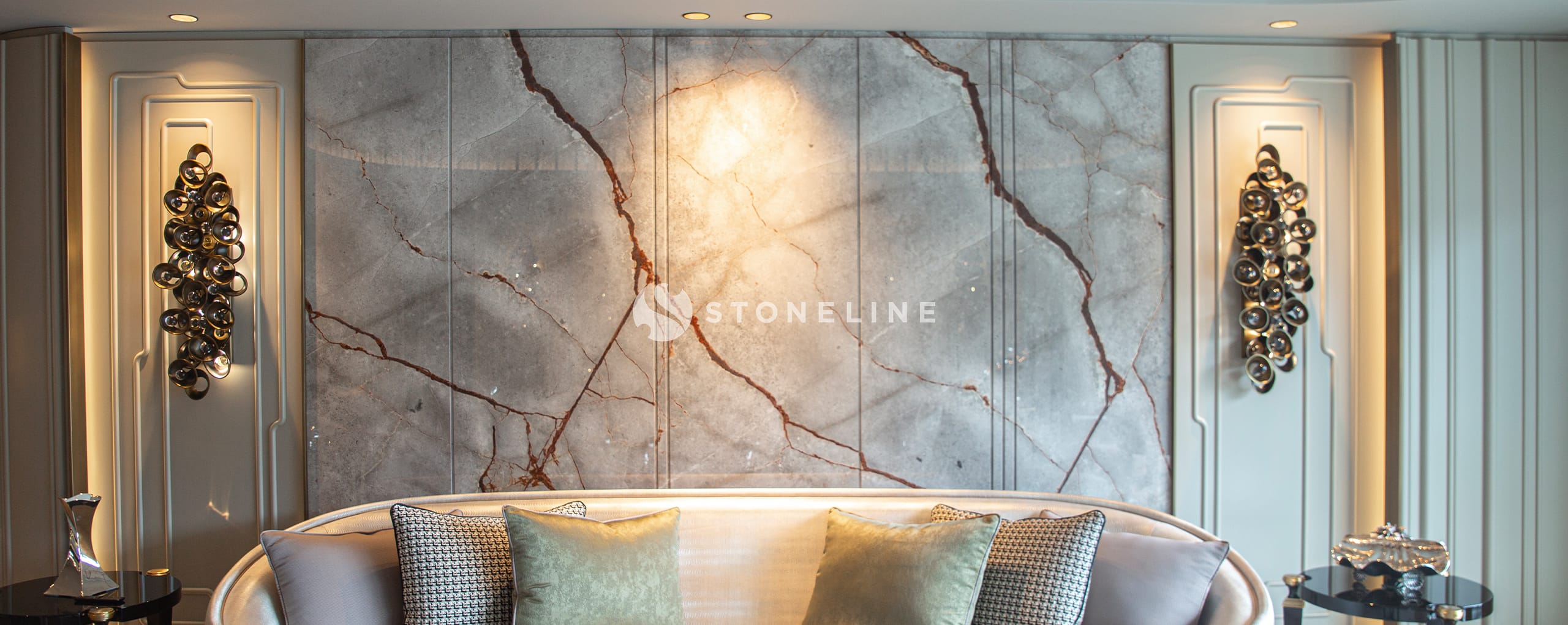
Marble is a natural stone formed by the transformation of limestone under heat and pressure. It is valued for its distinctive veining and the depth created by light reflection on polished surfaces. In interior and exterior projects, it is often preferred as a surface that can be used “almost everywhere” due to its visual character—its performance depends on the selection of the stone and the surface finish.
Our Popular Marble Products


Key Characteristics
Appearance & Structure
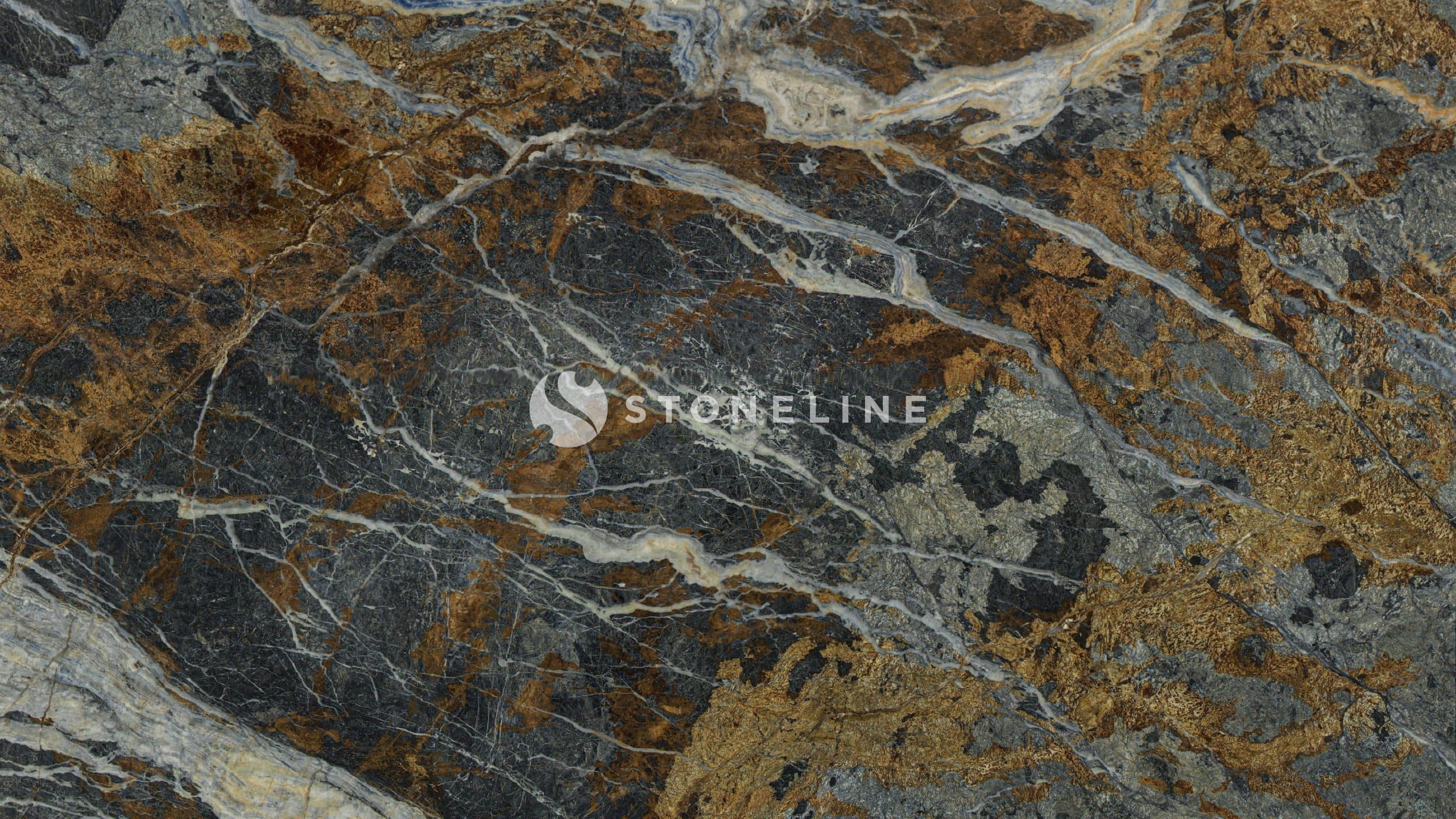
Marble is known for its natural veining, ranging from fine linear lines to strong, cloud-like movements. Colours are generally determined by mineral content; white, cream, grey, green, red, black, and occasionally warmer tones of each can be seen. This variation is part of the identity of the material and should be considered as a design element rather than a defect.
Physical Performance (General)
Marble has a structure that is easier to process compared to many igneous stones. This provides an advantage for detailed edges, profiles, and custom productions. In daily use, the most important considerations are its sensitivity to acids and the possibility of surface marking in areas with heavy contact. With the correct surface treatment, maintenance routine, and appropriate application area, it performs successfully in many interior spaces.
Variation & Expectations
Variation in natural stone is inevitable. Even slabs from the same selection may differ in vein direction, background tone, and movement. In projects where visual continuity is important, planning the slabs at an early stage and approving them through samples or layout previews is beneficial.
Our Marble Projects and Applications

MISELA

KORAY YAVUZER ARCHITECTS / PRIVATE RESIDENCE PROJECT / 1

KALU ARCHITECTURE – PRIVATE RESIDENCE PROJECT – 1
Common Applications in the UK
Residential Use
In the UK, marble is generally used in:
- Bathroom wall cladding and vanity units
- Fireplace surrounds and decorative focal points
- Entrance areas and corridors as striking surfaces
- Kitchen applications
Commercial Use
Marble is frequently preferred in commercial areas where brand perception is important:
- Reception counters and lobby walls
- Retail display areas and hospitality projects
- Design-oriented elements such as columns, panels, and staircases
In areas with heavy traffic, surface selection and maintenance planning become more critical. In such projects, honed or textured surfaces are generally preferred to reduce the visibility of minor marks.
Interior / Exterior
In the UK, marble is mostly used indoors. Although outdoor use is possible, weather conditions, temperature changes, and environmental effects may accelerate surface changes. If outdoor use is planned, the design decision should be made with an understanding of how the stone will change over time.
Design Considerations
Colour & Texture Effect
Light-coloured marbles can make spaces feel brighter and more spacious, especially in UK homes where natural light is limited. Strongly veined marbles create striking surfaces; therefore, it is recommended to keep other materials more simple.
Interaction with Light
Surface treatment changes how marble interacts with light:
- Polished surfaces: Emphasise pattern and depth, strongly reflect light
- Honed surfaces: Provide a more matte and softer appearance, compatible with modern interiors
- Textured surfaces: Offer more grip and character, but require more careful cleaning
Where It Works Well / Where It May Be Limited
Marble generally performs well in:
- Areas where design value is important and surfaces are viewed up close
- Projects where natural patina over time is accepted
- Applications where regular maintenance is possible
It may be less suitable in:
- Surfaces frequently exposed to acidic contact
- Areas where a consistently flawless appearance is expected
- Areas with uncontrolled heavy impact and wear
Performance & Maintenance
Wear, Staining & Protection
Marble may develop marks on the surface, especially when exposed to acidic substances. Sealers can reduce absorption but do not make marble completely stain-proof. The most appropriate approach is to consider marble as a natural surface that requires regular maintenance.
Daily Maintenance
- Use pH-neutral cleaners
- Clean spills quickly
- Avoid abrasive and acidic products
- Use protective measures in high-risk areas
Long-Term Use
Over time, marble may show changes in gloss and small marks. Some users prefer this, while others choose professional surface refinishing to restore the original appearance, which can be achieved with simple maintenance.
Supply & Project Planning
Selection & Specification
The following criteria should be clarified in projects:
- Application area
- Surface finish
- Edge details
- Colour and veining expectations
Timing & Consistency
- The visual direction should be determined at an early stage
- Sufficient material should be reserved
- Vein continuity should be planned
Before Installation
- Substrate and moisture control
- Installer experience
- Adhesive and grout selection
- Maintenance plan
FAQS
Acid sensitivity and risk of staining. These risks can be reduced with proper use and maintenance.
It has moderate resistance; protective use is recommended.
It is more sensitive compared to quartzite and granite.
With proper use, it can last for decades.
Polished surfaces can be slippery.
Yes, but maintenance and protection are important in high-traffic areas.
It can be used with proper maintenance.
Yes, it is widely used.
It depends on the application and aesthetic preference.
With pH-neutral products and a soft cloth.
Yes, especially in heavily used areas.
Staining may occur if liquids are absorbed. Proper care reduces this risk.
Yes. Following usage and maintenance recommendations helps preserve its original appearance.