 Stoneline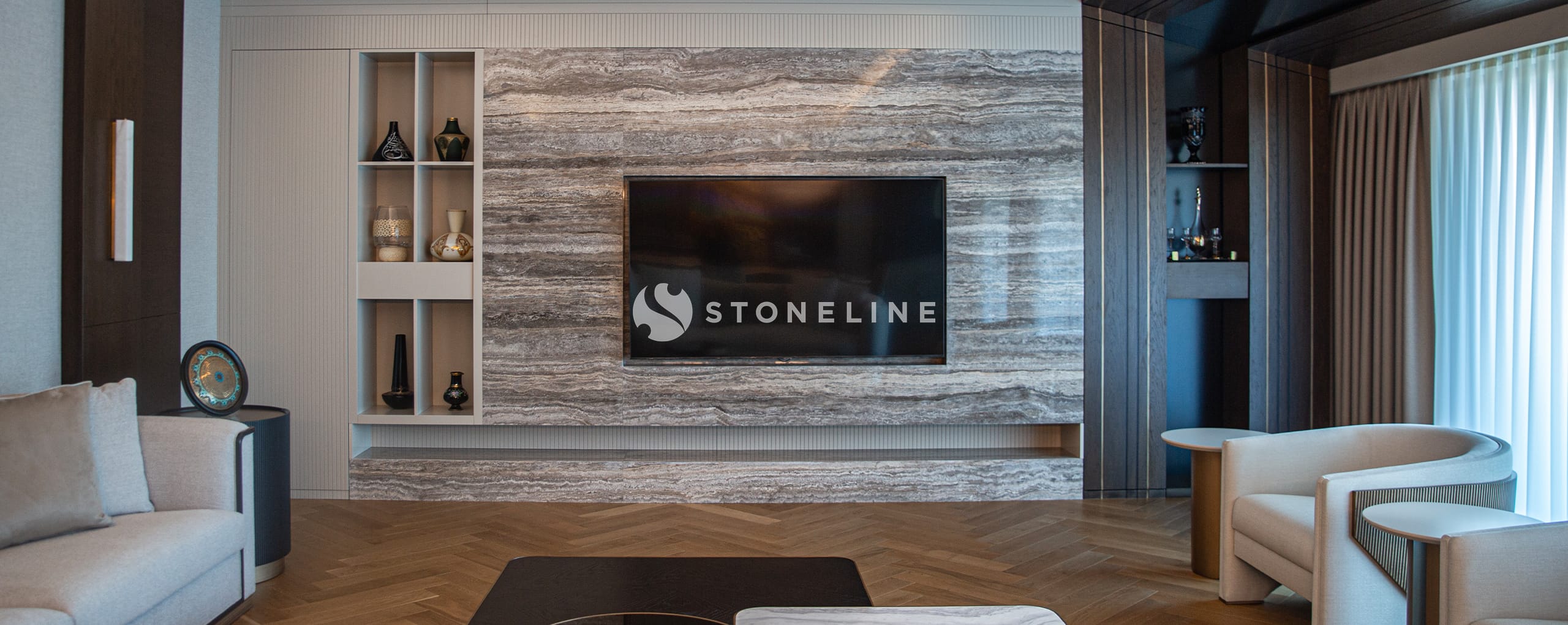
Travertine is a natural limestone formed around mineral-rich water sources, known for its warm tones and distinctive porous structure. In projects across the UK, it is frequently preferred for its calm, tactile appearance that complements both classic and contemporary interiors.
Due to its naturally porous nature, the performance of travertine depends on the selected surface finish, the applied protective treatment (sealer), and the conditions of daily use.
Our Popular Travertine Products


Key Characteristics
Appearance & Structure
Travertine typically appears in cream, beige, and light brown tones, sometimes featuring subtle linear veining. Its most distinctive feature is the natural voids and pores formed during its geological development.
These pores may be left open for a more rustic look or filled to achieve a smoother, more refined surface. This choice is critical both aesthetically and in terms of maintenance.
Physical Performance (General)
Travertine is a widely used architectural stone, particularly for flooring and wall cladding. With the right surface selection and proper sealing, it offers reliable performance in a wide range of interior and exterior applications.
Variation & Expectations
As with most natural stones, variation is inherent in travertine. Differences in tone, pore density, and pattern can occur from piece to piece. Samples provide a general indication but do not represent the entire batch.
For larger areas requiring a more consistent appearance, material selection should be finalized early, and spare stock should be retained for future repairs.
Our Travertine Projects and Applications

BOU DESIGN / PRIVATE RESIDENCE PROJECT / 4
This residential project stands out with stones collected from the Stoneline collection. Natural stones such as Silver Travertine (Italy), Colorado Bronzo, Dark Beige, Yellow Crystal, Amazon Green, Bianco Fantastico, Golden Black, White Beauty, Dark Emparador, Colorado Classico, Wow Quartzite, Rustic Green, Asterix and Emerald Quartzite preserve nature's unique texture, offering an aesthetic that provides design excellence from every angle.

SERRA KASLOWSKI / PRIVATE RESIDENCE PROJECT
Designed with Stoneline's prestigious natural stones, this exclusive residence project offers one of the most striking examples of luxury living and modern architecture. Created with the unique combination of Fusion Wow, Palagone, Persian Silver Travertine, Red Serpegiante and Calcadere Pink stones, this project creates an eye-catching living space by offering elegance and durability together.
Common Applications in the UK
Residential Use
In the UK, travertine is commonly used in:
- Entrance halls and open-plan living areas
- Kitchen floors and wall applications (with appropriate finish and maintenance)
- Bathroom floors and wall cladding
- Feature walls and fireplace surrounds
- Outdoor landscaping, pool surrounds, and wall cladding
Its warm colour palette helps create a more inviting atmosphere, particularly in spaces with limited natural light. In family homes, finishes that conceal daily wear tend to offer maintenance advantages.
Commercial Use
Travertine is also preferred in commercial settings where a natural and understated aesthetic is desired:
- Reception areas and lobby flooring
- Retail and hospitality spaces
- Wall cladding and decorative panels
- Outdoor landscaping, pool areas, and façade cladding
In high-traffic areas, correct surface selection, slip resistance, and a well-planned maintenance schedule are essential.
Interior vs Exterior Use
Travertine can be used both indoors and outdoors in the UK, but requires careful planning. Moist environments, shaded areas, and freeze-thaw cycles must be properly managed.
Recommendations for exterior use:
- Slip-resistant surfaces (typically textured finishes)
- Proper substructure, drainage, and joint detailing
- Regular cleaning to control algae and surface build-up
Design Perspective
Colour & Texture Impact
Travertine’s soft tones pair well with materials commonly used in the UK, such as wood, brass, and neutral palettes. It typically acts as a background material rather than the focal point of a space.
For stronger contrast, it can be combined with darker stones, painted cabinetry, or statement fixtures.
Interaction with Light
Travertine generally appears more matte and subdued compared to polished stones. Honed and brushed finishes reduce glare and provide a more natural feel under the UK’s cooler lighting conditions.
Polished finishes offer a higher shine but are less suitable for wet areas.
Best Use Cases
Travertine performs well in:
- Floors and walls where a warm, natural surface is desired
- Spaces where natural variation and patina over time are acceptable
- Areas where simple but regular maintenance can be maintained
Performance & Maintenance
Wear, Staining & Protection
Due to its porosity, travertine is typically sealed to reduce absorption and staining risk. However, sealing does not eliminate maintenance requirements.
In kitchens and bathrooms, promptly cleaning spills and avoiding harsh cleaning agents can significantly extend the lifespan of the material.
Filled travertine is generally easier to clean due to its smoother surface, while unfilled travertine offers a more natural look but requires more careful maintenance.
Routine Maintenance
- Use pH-neutral stone cleaners
- Regular sweeping to remove grit and particles
- Avoid acidic and abrasive products
- Periodic resealing depending on usage
In outdoor applications, regular cleaning is especially important during damp periods to prevent algae and surface build-up.
Long-Term Use
Over time, travertine may develop a patina, including tonal variations, minor edge wear, and visible usage marks in high-traffic areas.
Some consider this part of the stone’s natural character. For a cleaner and more uniform appearance, periodic professional maintenance can be planned.
Supply & Project Planning
Selection & Technical Decisions
Making the following decisions early simplifies the process:
- Filled vs unfilled
- Surface finish (honed, brushed, tumbled, polished)
- Application area (dry interior, wet area, exterior)
- Slip resistance requirements
Defining the “acceptable level of variation” at the beginning helps prevent issues, especially in large-scale projects.
Lead Time & Consistency
For larger projects:
- Order material in a single batch
- Allocate extra stock for wastage and future repairs
- Make decisions based on a broader selection, not a single sample
Before Installation
- Substrate condition and moisture levels
- Waterproofing in bathrooms and showers
- Installer experience
- Joint and edge detailing
- Maintenance plan suitable for the application
FAQS
When used in the right applications with appropriate finishes and maintenance planning, travertine does not present significant disadvantages.
Yes, but proper drainage, slip-resistant finishes, and regular maintenance are essential.
It depends on the finish. Polished surfaces are more slippery, while honed or brushed finishes offer better slip resistance.
Yes, it is commonly used with proper waterproofing and maintenance.
Filled travertine is smoother and easier to maintain, while unfilled travertine has a more natural appearance but requires more care.
These are natural voids formed during the stone’s geological process and are a defining characteristic.
Yes, in most cases it is recommended. It reduces absorption and staining but does not eliminate maintenance needs.
Yes, it is a strong option for those seeking a warm and natural look. However, surface selection, sealing, and application area should be carefully considered.